


Brainjot Prison: Escape Obby
4.02.00 Reviews
App Specs
- Version
- 1.6
- Updated On
- License
- Free
- Downloads
- 1,000,000+
- Developer
- CptGaming
- Categories
- Adventure
- Platform
- Android
Screenshots
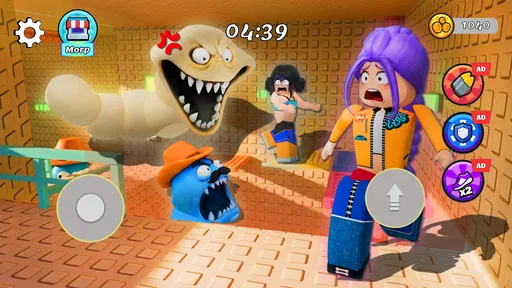
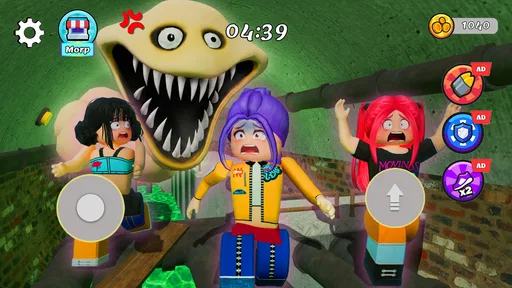
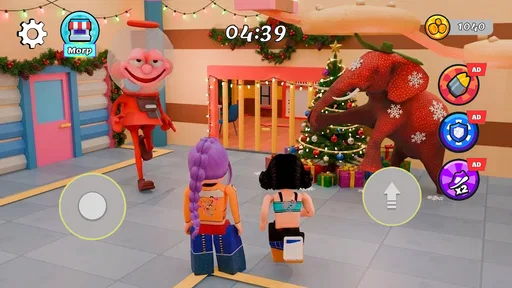
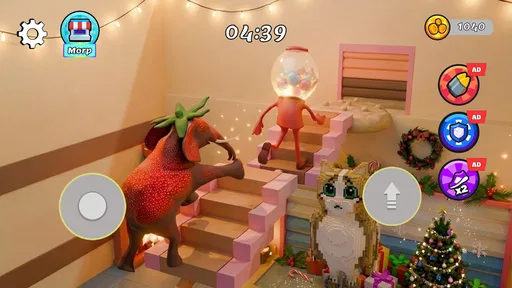
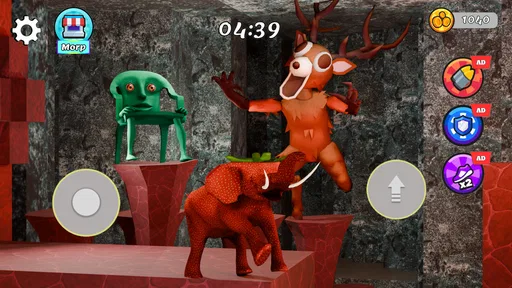
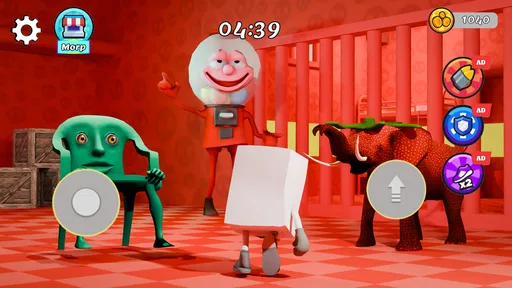
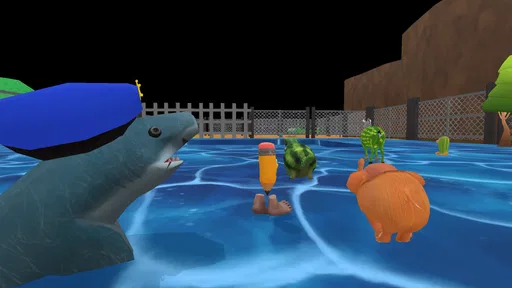
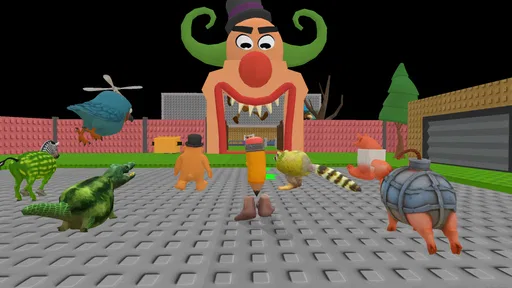
 Analysis by AppCompare
Brainjot Prison: Escape Obby is a free adventure game from CptGaming that immediately aims for a simple kind of tension: move quickly, read the danger ahead, and get through a hostile obstacle course before a mistake sends you back. I spent time with it as the sort of game you open when you want a short burst of action rather than a long story or a complicated role-playing system. Its appeal is easy to understand, but its lasting value depends heavily on how much you enjoy repeating difficult routes and improving through trial and error.
The game has a Teen content rating and runs on Android devices using version 9 or later. It reached the store on June 18, 2025, and the current version is 1.6. That makes it a relatively recent entry in the crowded escape obby space, where the basic idea is familiar but execution matters more than the premise. It has attracted over a million installs and sits at around a 4.0 average from roughly 1.3 thousand ratings, which suggests that plenty of players find the central challenge enjoyable while the experience is not universally smooth.
How the first week feels
My first impression was that the game understands the value of immediate movement. There is no need to learn a large collection of systems before reaching the actual challenge. The focus is on navigating traps and escaping frightening environments, so the opening appeal comes from reacting rather than preparing. That makes it approachable for someone who likes obstacle games but does not want to spend time building a character, managing equipment, or following a dense plot.
The prison setting gives the runs a clear purpose. You are not simply jumping across unrelated platforms with no context; you are trying to get out of a dangerous place. Even when the underlying activity is straightforward, that framing helps the first sessions feel more directed. I found myself naturally treating each section as a problem to solve: identify the safe route, notice the timing, and decide whether to move carefully or commit to a faster attempt.
That first-week appeal is strongest in short sessions. A quick attempt fits well into a commute, a break, or the few minutes before bed. The game does not ask for the same attention as a large adventure title, yet it can still produce the familiar “one more try” feeling when a failed jump seems close to success. For players who enjoy compact challenges, that is a useful strength.
The main control lesson is to avoid rushing simply because the game is built around escape. Fast movement can feel exciting, but it also makes traps harder to read. I had better results when I treated the first pass through an unfamiliar section as reconnaissance rather than a serious speed attempt. Watching the rhythm of a hazard, checking the landing area, and remembering the order of obstacles made later attempts feel more deliberate.
That approach also reveals one of the game’s more interesting trade-offs. The fear comes less from a complicated enemy system and more from uncertainty about what is waiting in the route. If you enjoy learning spaces through failure, this can be satisfying. If you expect a broad adventure with exploration, dialogue, or multiple ways to solve each situation, the experience may feel narrow.
Worth Reading Before You Choose

EA SPORTS FC Mobile 26 Is a Bigger Football Game, but It Takes Time

Flipboard Shows What News Apps Must Do Beyond the Feed

Switching to Android Auto Means Rethinking Your Driving Routine

Google Calendar Makes a Crowded Week Easier to Manage

Ludo King Makes the Most of the Minutes Between Plans

Baby Panda World Brings Quick Play to Modern Phones, but Its Game Library Feels Busy
Who gets the most from the opening sessions
I would recommend the first week to players who already enjoy platform challenges, escape-room pressure, and games built around repeated attempts. It is particularly suitable for someone who wants a clear objective and a quick restart after making a mistake. The Teen rating is also worth keeping in mind for families choosing games for younger players; the frightening prison-and-trap atmosphere is part of the identity rather than a minor detail.
It is less suitable for a player who needs a strong narrative reason to continue. The setting creates atmosphere, but the core pleasure is movement and survival. Likewise, anyone who dislikes repeating the same section after a failed action may find the design frustrating instead of motivating. This is not the kind of adventure I would choose when I want relaxed sightseeing or a calm puzzle experience.
A practical way to test the fit is to play in two different moods. Try one session with the goal of reaching new areas, then another with the goal of improving a route you already know. If only the first session feels enjoyable, the novelty may be doing most of the work. If the second session is satisfying because you are cleaner, faster, or more confident, the game has a better chance of becoming a regular choice.
What changes after the novelty
Once the prison escape theme is no longer new, the game has to rely on the quality of its obstacle rhythm. In my experience, that is where the difference between a temporary download and a repeatable habit becomes clear. The strongest moments come when a route looks intimidating at first but becomes readable after a few attempts. The weakest moments are those in which failure feels like a surprise without teaching anything useful.
For month-to-month value, I would not judge it by the amount of time it can consume. A game can be valuable without becoming a daily routine. Here, its potential role is closer to a compact skill challenge: open it when you want a focused test, play until your concentration drops, and leave before repeated mistakes turn into irritation. That makes it easier to maintain as a small part of a game collection rather than expecting it to replace a larger adventure title.
One useful habit is to separate progress sessions from performance sessions. During a progress session, I focus on discovering the safest route and accepting that some attempts will be messy. During a performance session, I replay familiar sections and try to remove hesitation. Mixing those goals can make a failed exploratory attempt feel worse than it should. Separating them gives each run a clearer purpose.
Another tip is to stop after a successful breakthrough instead of immediately demanding a perfect follow-up. When I finally understood a difficult sequence, continuing while tired often erased the satisfaction and encouraged careless play. Leaving on a good attempt makes it easier to return later with a useful mental map. That matters in an obstacle game because memory of timing and positioning is part of the progress.
The game’s recurring value will also depend on how much you enjoy self-imposed improvement. Players who need a constant stream of new mechanics may eventually feel that the basic escape format has shown everything it has to offer. Players who like refining reactions can return for the smaller rewards: a cleaner run, fewer mistakes, or a more confident approach to a section that once seemed impossible.
Keeping it in a regular rotation
The maintenance burden is relatively light in the sense that the game does not require a large personal commitment to remain playable. You can return after a gap without needing to remember an elaborate story or rebuild a complicated setup. That is a good quality for a mobile adventure game. A short refresher run should be enough to recover the feel of movement and the logic of the traps.
However, low commitment does not mean unlimited freshness. The game asks you to maintain your own interest. There is a difference between a title that brings you back with new reasons and one that remains available whenever you choose to revisit it. Brainjot Prison: Escape Obby is more convincing in the second role. I can see myself keeping it installed for occasional challenge sessions, but I would not assume it will become a permanent daily habit for every player.
That distinction is important when comparing it with larger alternatives in the adventure category. A story-driven adventure usually offers character development, exploration, and a sense of moving through a wider world. A competitive platform game may offer rankings or a stronger reason to improve against other people. This game is more direct: the route itself is the opponent. That simplicity is convenient, but it also limits the number of reasons to return once the challenge becomes familiar.
For a player managing limited storage or attention, the free price makes trying it easy. The better question is whether it earns continued space after the initial experiment. I would keep it if I wanted a no-cost obstacle game for short sessions and enjoyed the atmosphere. I would remove it if I found myself opening it automatically, repeating familiar sections without a clear goal, and ending each session more tired than entertained.
The current version, 1.6, is the version I would use when judging the experience today. I would still treat the game as something to check periodically rather than as a finished long-term platform. A future return is most worthwhile when you have a specific reason to play: testing a route, revisiting a section after time away, or looking for a quick challenge. Without that intention, the same structure can start to feel like background noise.
Where fatigue begins
The biggest source of fatigue is repetition without a visible sense of improvement. Repeating a trap can be satisfying when you understand why you failed and can change your approach. It becomes draining when the attempt feels identical each time. This is why I recommend slowing down during the first encounter with a section. A careful mistake is more useful than a hurried one because it gives you information you can apply.
Another possible friction point is the gap between the game’s frightening presentation and the actual depth of play. The atmosphere may suggest a larger survival adventure, while the moment-to-moment activity remains focused on obstacle navigation. That is not a flaw for fans of obbies, but it can disappoint players who arrive expecting a substantial horror story or a wide prison simulation.
The game can also lose some appeal for people who want a relaxed mobile experience. Even a short course can demand concentration when traps are placed to punish hesitation or poor timing. I would not choose it when I am distracted, using a small screen in an awkward position, or looking for something to play while doing another task. The challenge works best when I give it a few uninterrupted minutes.
There is also a personal tolerance issue around failure. Some players interpret a failed attempt as useful feedback; others experience it as wasted time. Brainjot Prison: Escape Obby is naturally better for the first group. Before committing to regular play, I would pay attention to my reaction after three or four failed attempts. If I feel curious about adjusting my route, the loop is working. If I feel that the game is merely blocking progress, another type of adventure would be a better choice.
A final fatigue risk is relying too heavily on the same playing style. Constantly sprinting creates avoidable errors, while moving with excessive caution can make the game feel slow. Switching between observation, controlled movement, and faster attempts helps preserve variety within the limited format. That is not a hidden mode or a separate feature; it is a way of getting more value from the challenge that is already there.
My long-term verdict
After the first-week excitement fades, I see Brainjot Prison: Escape Obby as a focused, occasional adventure rather than a complete long-term hobby. Its best quality is clarity: the objective is easy to understand, the prison escape theme gives the runs direction, and the trap-based gameplay can create genuine tension in a small package. The free entry point makes it reasonable to try, especially if you already know that repeated obstacle courses are your kind of game.
Its limitations are just as clear. The experience may not provide enough variety for players who need a continuing story, broad exploration, or a strong social or competitive layer. The same trial-and-error structure that motivates one player can exhaust another. I also would not recommend it as a universal family pick simply because the Teen rating and frightening setting should match the player’s comfort level.
My recommendation is conditional but positive: try it if you want a direct mobile adventure challenge that can fill short sessions and reward patience. Use the first attempts to learn rather than rush, and return with a concrete goal instead of expecting endless novelty. If you prefer games that constantly introduce new systems, a larger story adventure will probably hold your attention longer. If you enjoy mastering dangerous routes one mistake at a time, this game has enough personality to deserve a place on your device.
In the end, its lasting space comes from habit, not volume. I would keep it installed for those moments when I want a tense escape course without paying or committing to a long campaign. I would not promise myself daily play, and I would not mistake its simple structure for a full-scale adventure. Its strongest use is as a compact test of timing, memory, and patience—a worthwhile choice when that is exactly what I want.
Pros
- Simple controls make it easy to start playing quickly.
- Short levels are convenient for brief gaming sessions.
- Obby challenges test timing
- movement
- and patience.
- The prison setting gives the escape theme a clear identity.
- Progress feels rewarding when difficult obstacles are finally cleared.
Cons
- Some stages may feel repetitive after extended play.
- Precision jumps can be frustrating on smaller phone screens.
- Failure may require repeating sections you already completed.
- The game may offer limited depth beyond its obstacle courses.
- Performance can vary depending on the device and game updates.
FAQs for Brainjot Prison: Escape Obby
What is Brainjot Prison: Escape Obby?
Brainjot Prison: Escape Obby is a mobile obstacle-course game that combines prison-escape themes with platforming challenges. You guide your character through dangerous corridors, traps, jumps, moving objects, and puzzle-like sections while trying to reach the exit. The main appeal is its quick, level-based gameplay, where success depends on timing, observation, and learning from failed attempts.
How do you play Brainjot Prison: Escape Obby?
Gameplay is based on navigating an obstacle course from a third-person perspective. You normally use on-screen controls to move, jump, and avoid hazards, although the exact control layout may vary by device or version. Each stage requires careful movement through prison-themed environments, and checkpoints or restarts allow you to try again when a trap catches you.
Is Brainjot Prison: Escape Obby suitable for children?
The game is generally presented as a lighthearted escape challenge rather than a realistic prison simulation. However, parents should still check the store rating, advertising content, privacy information, and any online features before allowing younger children to play. Difficulty, cartoon-style danger, in-app purchases, and third-party advertisements can differ depending on the platform and the version installed.
Does Brainjot Prison: Escape Obby require an internet connection?
Whether an internet connection is needed can depend on the specific release and the features enabled in the installed version. Core obstacle-course levels may be playable offline, but advertisements, analytics, updates, cloud features, or other online services can require connectivity. For the most reliable information, review the current Google Play or App Store listing before downloading.
Is Brainjot Prison: Escape Obby free to download and play?
Brainjot Prison: Escape Obby may be available as a free download, but free games can still include advertisements, optional purchases, or extra content. Before installing, check the official store page for the current pricing model, supported devices, permissions, and purchase details. If children use the device, enabling purchase restrictions is a sensible precaution.


